
Selling a home is stressful enough without worrying that an unpaid gas bill or a few months of missed council tax could derail the sale. If you are behind on household bills, it is natural to wonder whether you have to clear everything before your solicitor can hand over the keys.
The short answer is no, not usually. In Scotland, gas, electricity, broadband and most other utility debts belong to the person named on the account, not to the property, so they do not pass to your buyer and they do not normally stop a sale. The exception is when a creditor, often the council chasing council tax and water charges, has taken court action and registered an inhibition against you. Even then, the debt can usually be paid from the sale proceeds on the date of entry. This guide explains how each type of bill works, what your solicitor will check and how to tie up every account cleanly.
Key points at a glance
- Debts follow you, not the house: energy, phone and broadband arrears stay with the account holder after the sale.
- Water is billed with council tax: for most Scottish homes, water and sewerage charges are collected by the council on the council tax bill, so arrears are treated in the same way.
- Inhibitions are the main risk: if a creditor has registered an inhibition against you, it must be dealt with before the sale can settle.
- Prepayment meter debt is yours: tell your supplier you are leaving so any debt on the meter is moved to your final bill, not left for the buyer.
- Readings protect you: take dated photos of every meter on the day you hand over the keys.
- Arrears can be cleared from the proceeds: your solicitor can pay creditors from the sale price if you instruct them to.
Do utility debts stay with you or with the property?
For almost every household bill, the debt is a personal one. Your contract is with the supplier, and selling the house does not end what you owe. Equally, your buyer does not take on your arrears simply by moving in. The table below shows how the main bills work when you sell.
| Bill | Who bills you | Does the debt stay with you? | Can it hold up the sale? |
|---|---|---|---|
| Gas and electricity | Your energy supplier | Yes, it stays with the account holder | Not normally |
| Water and sewerage (unmetered) | Your local council, on the council tax bill | Yes, for the period you were liable | Only if a court decree leads to an inhibition |
| Metered household water | Scottish Water directly | Yes | Not normally |
| Council tax | Your local council | Yes | Only if a court decree leads to an inhibition |
| Broadband, phone and TV | Your provider | Yes, and early exit fees may apply | No |
| Factor fees in a flat | Your property factor | Yes, although some common repair costs can also affect the buyer | Sometimes, as they are raised in the missives |
| Heating oil or LPG | Your fuel supplier | Yes | No, but agree what happens to fuel left in the tank |
Flats are the main area where a debt can follow the property. Unpaid shares of common repairs can, in some cases, be recovered from a new owner, which is why buyers’ solicitors ask for a factor’s letter. Our guide to selling a flat with outstanding factor fees explains how this is handled.
How are water and sewerage charges billed in Scotland?
Most Scottish homes do not receive a separate water bill. Scottish Water sets the charges each year, and your local council collects them alongside council tax. The amount depends on your council tax band. For 2026 to 2027, Scottish Water’s combined water and waste water charge for a Band D home is £652.32 a year.
Because water and sewerage charges sit on the council tax bill, they are treated much like council tax when it comes to arrears. If you receive Council Tax Reduction, you still have to pay water charges, although you may get up to 35% off through the Water Charges Reduction Scheme, which councils apply automatically. A small number of homes have a water meter and are billed directly by Scottish Water instead.
What happens to water arrears when you sell?
Your liability normally ends when you stop being the owner or occupier, which for most sellers is the date of entry. The council will issue a final bill covering council tax and water up to that date. Any arrears remain your personal debt after the sale. If they are left unpaid, the council can apply to the court for a summary warrant, add a surcharge for the costs of collection and then use recovery action such as arresting wages or bank accounts. For more on this, read our guide to selling a house with council tax arrears in Scotland.
Do you still pay if the house is empty while you sell?
Usually, yes. Councils can offer exemptions or discounts on council tax for some unoccupied homes, and can charge up to double for homes that have been empty for more than a year. The rules vary between councils, so check yours. According to Scottish Water, water discounts for empty homes were abolished in 2006, and the 50% council tax discount some councils give to empty, unfurnished homes does not reduce water and waste water charges.
If your home is not connected to the public sewer, for example because it has a septic tank, or it relies on a private water supply, check that your council tax bill does not include charges for services you do not receive.
What about gas and electricity debts?
If you owe money to your energy supplier, that debt is yours and it stays with you when you move. It does not attach to the property, and your buyer will not be asked to pay it. The supplier will simply include it in your final bill and continue to collect it from you at your new address.
Citizens Advice recommends giving your supplier at least 48 hours’ notice before you move out, reading your meters on the day you leave and giving a forwarding address. Your supplier should then send a final bill within six weeks, and if you are in credit, refund you within 10 working days of that final bill. If you cannot pay in one go, ask for a repayment plan before you move rather than after. Suppliers are expected to take your ability to pay into account.
Energy debt during home moves is a live issue for the regulator. Ofgem ran a call for input on tackling energy debt when people move home between December 2025 and January 2026, and has said it intends to consult on dedicated guidance for suppliers, so expect the process to become more standardised.
What if you have a prepayment meter?
Any debt being recovered through your prepayment meter is still your debt. Tell your supplier you are moving so they can take the debt off the meter and transfer it to your final account. If you do not, the buyer could end up topping up a meter that is still collecting your arrears, which causes disputes and delays.
Citizens Advice advises new occupiers to contact the supplier before topping up a prepayment meter, and says suppliers should refund extra charges paid for a previous occupant’s debt if the new occupier can prove when they moved in. Leaving your meter key or card in the property, with a note of the supplier’s name, makes life easier for everyone.
Smart meters and photos
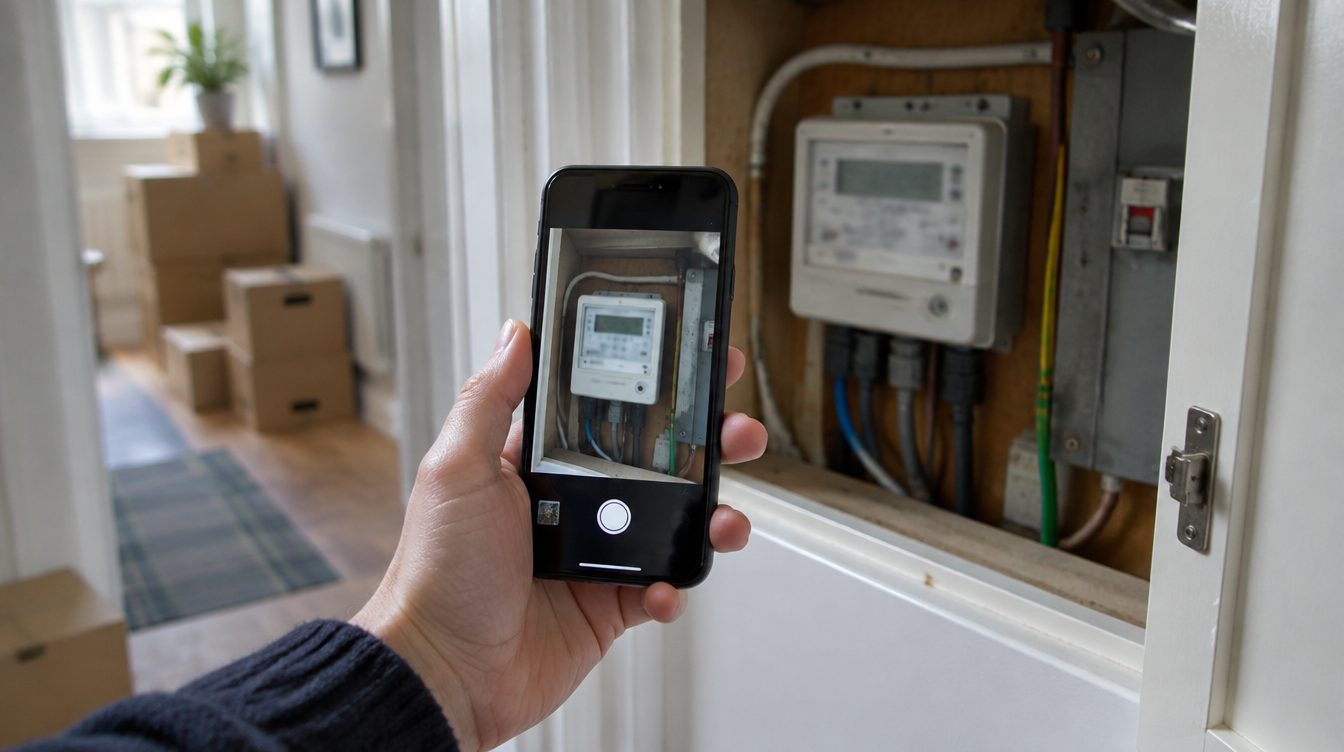
Even with a smart meter, take your own reading and a dated photo on the day you hand over the keys. Smart meters sometimes stop sending readings, particularly after a change of supplier, and a photo is the simplest evidence if your final bill is wrong.
Can utility arrears stop or delay your sale?
In most cases, no. Your solicitor does not need a clearance letter from your energy supplier or broadband provider before the sale can proceed, and ordinary arrears do not appear in the title to your property. The buyer’s solicitor is concerned with your ownership and any rights or burdens over the property, not with your personal bills.
The situation changes if a creditor has taken court action. A creditor with a court decree, or a council with a summary warrant for council tax and water charges, can register an inhibition against you. The Register of Inhibitions, kept by Registers of Scotland, publicises people who cannot validly sell or borrow against property. The buyer’s solicitor will search it before settlement, and the sale cannot go through cleanly until the inhibition is discharged, usually by paying the debt from the sale proceeds on the date of entry.
Our guide to inhibitions, charging orders and selling your house in Scotland explains how these are dealt with in practice.
Good to know: council tax and water charges are treated as priority debts because the council can recover them quickly once it has a summary warrant. If you are behind, contact the council before you put your home on the market. A payment arrangement agreed early is far easier than unpicking an inhibition a week before your date of entry.
What should you do before the date of entry?
A little organisation in the last couple of weeks before the sale avoids most utility problems. Work through this checklist.
- List every account: gas, electricity, water if metered, council tax, broadband, phone, TV licence, insurance, oil or LPG, and any factor or service charges.
- Give notice: tell each supplier your moving date and forwarding address at least 48 hours in advance.
- Tell the council: give your sale date and new address so they can close your council tax and water account and issue a final bill.
- Read and photograph meters: do this on the day you hand over the keys, and keep the photos until every final bill is settled.
- Deal with prepayment meters: ask the supplier to move any debt off the meter and leave the key or card for the buyer.
- Agree fuel left in the tank: if you have heating oil or LPG, your solicitor can agree in the missives whether the buyer pays for what is left.
- Keep direct debits running until final bills arrive: cancelling too early can trigger late payment charges.
- Redirect your post: so final bills and refunds reach you.
If you are selling from elsewhere in the UK or abroad, all of this can be done remotely. Our guide to selling a Scottish property without being there in person covers key handovers and meter readings from a distance, and what happens on completion day walks through the day itself.
What if you are selling a rented property?
Where a tenant lives in the property, they are normally responsible for the energy bills, council tax and water charges for the period of their tenancy, unless the tenancy agreement says otherwise. Once the property is empty, liability for council tax and water charges usually falls back on you as the owner.
Take meter readings and photos at each change of occupancy, give them to the suppliers and keep copies. If a tenant has left debt on a prepayment meter, ask the supplier to remove it before the buyer moves in. If you are selling with tenants still in place, our guide to selling a tenanted property in Scotland explains the wider process, and it is worth checking you have an up to date gas safety certificate if the home has a gas supply.
What if you cannot afford to clear the arrears?
You are not alone, and selling can actually be part of the solution. The most important thing is not to ignore letters, especially from the council.
- Pay from the sale proceeds: you can instruct your solicitor to pay specific creditors from the money left after your mortgage and selling costs. Our guide to the fees involved in selling a house in Scotland helps you estimate what will be left.
- Agree a payment plan: energy suppliers and councils will usually agree affordable instalments if you contact them early.
- Get free debt advice: Citizens Advice Scotland and other free, impartial debt advice services can help you prioritise and explain Scottish options such as the Debt Arrangement Scheme.
- Think about timing: if mortgage arrears are building too, a quicker sale may stop the debt growing. Read whether you can sell before your home is repossessed and how selling your house can help clear debt.
Good to know: any money owed to creditors is only paid from your sale proceeds if you instruct your solicitor, or if an inhibition or other secured claim requires it. Ask your solicitor for a full settlement statement so you can see exactly where the money is going and when you will receive the balance.
How a quick sale can help when bills are piling up
When arrears are building, a long sale with months of viewings and a chain of buyers can make things worse, as council tax, water, energy and mortgage payments keep falling due on a home you are trying to leave. Selling to a cash buyer can shorten that period and give you a date of entry you can plan around.
At Sell My House Fast in Scotland, we help homeowners sell quickly for cash, with no viewings and no chain. Outstanding household bills do not stop us making an offer, and your solicitor can clear what you owe from the proceeds on the day of settlement. You can read what happens after you accept a cash offer to see how the process works.
Frequently asked questions
Will my buyer have to pay my unpaid gas or electricity bills?
No. Energy debts belong to the account holder, not the property. Your buyer will set up their own account, and your supplier will continue to collect any arrears from you at your new address.
Are water charges included in council tax arrears?
For most Scottish homes, yes. Water and sewerage charges are collected by the council on the council tax bill, so arrears are usually recovered together. Homes with a water meter are billed by Scottish Water directly.
Do I still pay council tax and water charges after I move out but before the sale?
Usually, yes. As the owner, you remain liable for an empty property until ownership passes on the date of entry. Some councils offer exemptions or discounts for unoccupied homes, but these do not always reduce water charges, so check with your council.
Can my solicitor pay my arrears from the sale price?
Yes. If you instruct them, your solicitor can pay council tax, energy or other creditors from the proceeds after the mortgage and selling costs. If an inhibition has been registered against you, the debt will normally have to be paid at settlement anyway.
Will utility arrears affect my credit when buying my next home?
They can. Unpaid accounts that go into default may appear on your credit file and be seen by future lenders. Clearing or agreeing a plan for arrears before you move helps protect your credit record.
Behind on bills and need to sell?
Get a free, no obligation cash offer for your Scottish home. No viewings, no chain, and your arrears can be cleared from the proceeds on a date of entry that suits you.
