
If you are selling a home in Scotland but now live somewhere else, or you plan to move before the sale goes through, you are far from alone. One of the most common questions we hear is whether you need to be physically present in Scotland to sign the paperwork, hand over the keys and complete the sale.
The short answer is no. In the vast majority of cases, a Scottish property sale can be completed from anywhere in the UK or abroad. Your solicitor does the legal work, documents travel by courier or secure email, and the sale proceeds are paid straight into your bank account. This guide explains exactly how that works, which steps still need your personal input, and how to avoid the delays that catch out sellers who are not on the doorstep.
Key points at a glance
- You do not need to be in Scotland at any stage of a property sale.
- Your solicitor handles offers, missives, the disposition and the date of entry on your behalf.
- Identity checks can usually be completed remotely using certified documents or a digital ID app.
- The disposition is normally signed in wet ink in front of one adult witness, wherever you happen to be.
- A power of attorney lets a trusted person or your solicitor sign for you if you cannot sign yourself.
- If you live outside the UK, you must report the sale to HMRC within 60 days of completion, even if no tax is due.
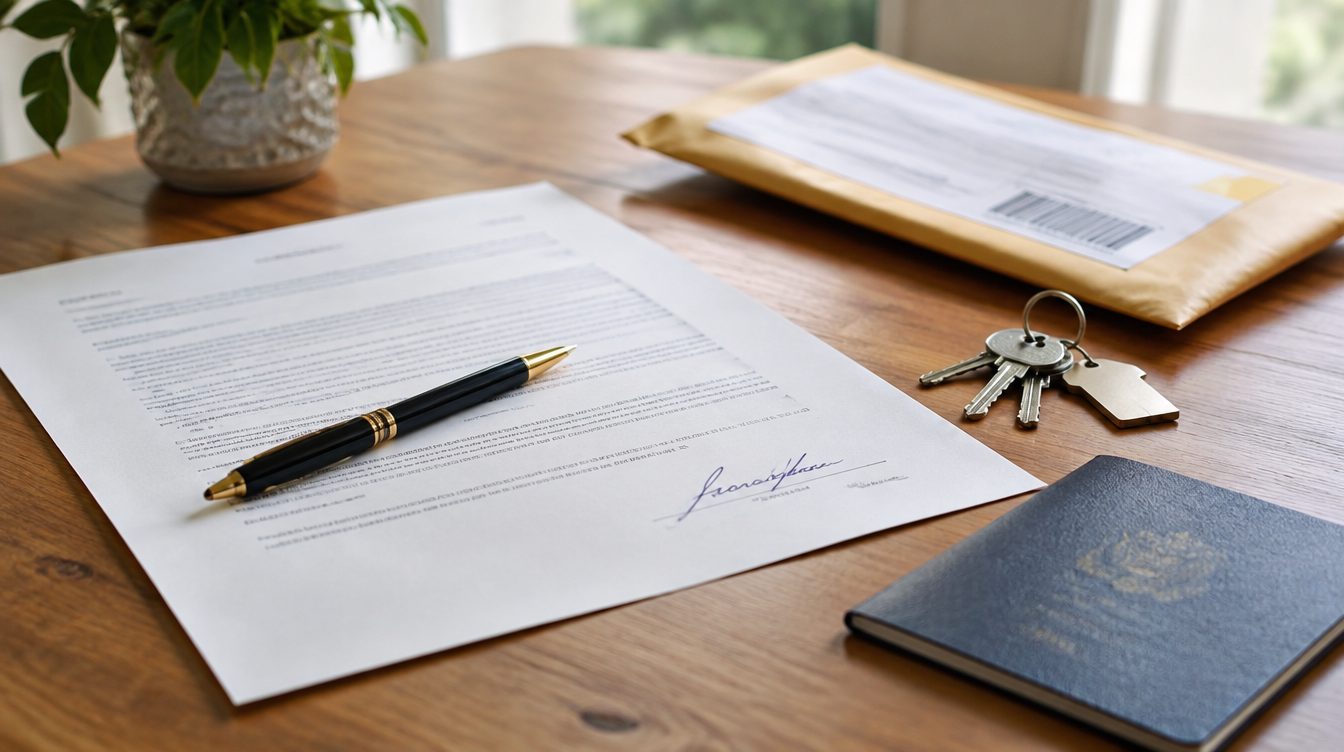
Can you sell a property in Scotland without being there in person?
Yes. Scots property law has no rule that says a seller must attend a meeting, visit a solicitor’s office or be present on the date of entry. The whole conveyancing process is designed to run through solicitors, who act as your agents throughout the transaction.
This is why remote sales are so common. Executors selling an inherited home, landlords who live in England, families who have relocated for work and people who have retired abroad all sell Scottish property without travelling back. If you are based overseas, our guide to selling a house in Scotland if you live abroad covers the wider practicalities in more depth.
What matters far more than your location is choosing a solicitor who is comfortable working at a distance, responds quickly by email and phone, and can explain each document before you sign it.
Which steps need your input, and which are handled for you?
The table below breaks down a typical Scottish sale and shows how each stage is handled when you are not around.
| Stage of the sale | Do you need to be there? | How it works remotely |
|---|---|---|
| Instructing a solicitor | No | Engagement letter signed electronically or by post |
| Identity and anti money laundering checks | No | Certified ID, a digital ID app or a video check |
| Home Report | No | Surveyor arranges access with a key holder or agent |
| Viewings | No | Handled by an agent, a key holder or skipped entirely with a cash buyer |
| Accepting an offer | No | You give instructions to your solicitor by email or phone |
| Concluding missives | No | Your solicitor signs missives on your behalf |
| Signing the disposition | No, but you must sign it | Posted or couriered to you, signed in front of a witness and returned |
| Mortgage redemption | No | Solicitor obtains the redemption figure and repays the lender |
| Date of entry and key handover | No | Keys posted to the solicitor or left with a nominated person |
| Receiving the sale proceeds | No | Transferred by bank transfer to your nominated account |
What does your solicitor actually do when you sell from a distance?
In Scotland your solicitor is the engine of the whole transaction. They check your title, deal with the buyer’s solicitor, negotiate the contract, prepare the legal documents and manage the money on the day of settlement. If you are wondering whether you can skip this step, our article on whether you need a solicitor to sell your house explains why you cannot in practice.
When you are not local, your solicitor will typically:
- Gather your title deeds and check the Land Register for any issues (see the role of the Land Register of Scotland).
- Request the documents they need from you, such as ID, mortgage details and any building warrants.
- Report each offer to you and take your instructions in writing.
- Negotiate and conclude missives, which are the letters that form the binding contract.
- Prepare the disposition, which is the deed that transfers ownership to the buyer.
- Repay your mortgage and any other secured lending from the sale price.
- Send you a final statement and transfer the balance to your bank account.
It is worth asking for a list of the documents you need to sell a house in Scotland at the very start, so that nothing has to be chased while you are in a different time zone.
How do identity checks work if you are not in Scotland?
Every Scottish solicitor must verify who you are and where your money comes from under the anti money laundering rules. This is often the first point where a remote seller expects to need a face to face meeting, but it rarely does.
Most firms now offer one or more of the following:
- Digital ID verification: you photograph your passport or driving licence in an app and take a short selfie video, which is matched electronically.
- Certified copies: a solicitor, notary or other professional where you live certifies copies of your ID and proof of address, which you then post to your Scottish solicitor.
- Video call checks: some firms will check your original documents live on a video call alongside an electronic search.
If you are abroad, check which option your solicitor accepts before you pay for a local notary, because many firms are happy with a digital check that costs a fraction of the price.
How does the Home Report fit in when you are not local?
If you are selling on the open market, you need a Home Report before the property can be advertised. It contains a single survey and valuation, an Energy Performance Certificate and a property questionnaire that you complete yourself.
You can fill in the questionnaire online or by email, and the surveyor will arrange access through your estate agent, a neighbour, a relative or anyone else holding a set of keys. For a full explanation, read what a Home Report is and when you need one, and our guide to whether you have to clear the house before selling.
Good to know: if you sell directly to a cash buyer rather than marketing the property, you are not usually required to produce a Home Report, which removes one of the steps that normally needs someone on site.
What happens when a buyer makes an offer?
Offers in Scotland are made formally in writing by the buyer’s solicitor. If there is a lot of interest, your agent may set a closing date so that all interested parties submit their best offer at the same time. Your solicitor will send you each offer with a plain English summary of the price, the proposed date of entry and any conditions.
You do not have to accept the highest figure. A slightly lower offer from a buyer who is ready to proceed may be the safer choice, particularly when you are managing the sale from a distance. Our guide to whether you have to accept the highest offer explains how to weigh these up, and what happens after an offer is accepted walks through the next steps.
What are missives, and do you have to sign them?
Missives are the exchange of formal letters between the two solicitors that together form the binding contract of sale. In Scotland, solicitors almost always sign missives as agents for their clients, which means you do not have to sign them yourself.
What you must do is read and approve the terms before your solicitor concludes them. Once missives are concluded, the bargain is binding on both sides, so withdrawing afterwards can leave you liable for the buyer’s losses. If a buyer withdraws late, our article on what happens if your buyer pulls out at the last minute explains your options.
Signing the disposition from outside Scotland
The disposition is the deed that transfers ownership to the buyer, and it is the one document you will almost certainly need to sign personally. For deeds that are registered in the Land Register of Scotland, a wet ink signature has traditionally been required. Registers of Scotland has been working towards accepting digitally signed deeds, so ask your solicitor whether an electronic option is available for your sale.
Under the Requirements of Writing (Scotland) Act 1995, a deed is self proving when it is signed by you and by one witness. The rules are simple, but they must be followed exactly:
- Your witness must be aged 16 or over and must not be a party to the deed.
- They should be physically with you when you sign. Witnessing over a video call is not reliable for a registered deed.
- The witness signs immediately after you and adds their full name and address.
- Do not fill in the date or place of signing unless your solicitor asks you to. They will usually complete these details themselves.
Unlike some other countries, Scotland does not require a notary or embassy to witness a disposition signed abroad. Any suitable adult will do, although a neighbour, colleague or friend is a better choice than a close family member. Use a tracked courier to return the original, as a lost deed can delay your date of entry by days.
Can someone else sign for you using a power of attorney?
Yes. If you cannot sign the disposition yourself, perhaps because you are travelling, unwell or simply hard to reach, you can grant a power of attorney to a relative, friend or solicitor. They can then sign the sale documents in your name.
A power of attorney used for a property sale must be properly drafted and signed, and the buyer’s solicitor will want to see it before settlement. If you are selling on behalf of someone else, our guide to power of attorney and selling someone else’s property covers the rules in detail.
What happens to your mortgage?
If there is a mortgage over the property, your solicitor will obtain a redemption statement from your lender, pay off the loan from the sale proceeds on the date of entry and arrange for the security to be discharged. You do not need to visit a branch or make the payment yourself.
Check whether an early repayment charge applies, especially if you are part way through a fixed rate. Our articles on selling a house with a mortgage in Scotland and selling before your fixed term ends explain what to look out for.
Do you need to tell HMRC if you live abroad?
If you are not resident in the UK for tax purposes, you must report the sale of UK residential property to HMRC and pay any Capital Gains Tax due within 60 days of the completion date. This applies even if you have made no gain or there is no tax to pay, so it is easy to overlook.
UK residents selling a home that has always been their main residence will usually qualify for Private Residence Relief, but rental properties and second homes are treated differently. Our guides to Capital Gains Tax on a buy to let in Scotland and tax when selling a second home explain the rules, and a tax adviser can confirm your own position.
What happens on the date of entry?
The date of entry is the day the buyer’s solicitor sends the purchase price and ownership passes to the buyer. Your solicitor will exchange the signed disposition for the funds, repay your mortgage, deduct their fees and then transfer the balance to you, usually on the same day or the next working day. Our article on how soon you get paid after selling your house explains the timings.
The practical tasks can all be arranged at a distance:
- Post the keys to your solicitor or agent by tracked delivery, or leave them with a trusted neighbour or relative.
- Give final meter readings to your energy and water suppliers. Our guide to settling utility arrears before selling explains what happens with any outstanding bills.
- Tell the council so your council tax account can be closed. If there is anything owed, read selling a house with council tax arrears.
- Keep buildings insurance in place until the date of entry, and check whether your policy has conditions for unoccupied properties.
For a step by step view of the day itself, see what really happens on completion day.
Tips to avoid delays when selling from a distance
- Instruct your solicitor early so ID checks and title checks are done before an offer arrives.
- Agree how you will communicate, including the best times to call if you are in a different time zone.
- Line up your witness in advance so the disposition can be signed and returned the day it arrives.
- Use tracked courier services for original documents rather than standard post.
- Nominate a local key holder for surveyors, agents and the buyer on the date of entry.
- Keep your UK bank account open until the proceeds have arrived, as international transfers can take longer and cost more.
How a cash sale makes selling from a distance simpler
Every extra step in a traditional sale is one more thing to arrange from afar: viewings, a Home Report, chasing a buyer’s mortgage and keeping the house presentable for months. Selling to a cash buyer removes most of that. There are no viewings to coordinate, no chain to manage and you can choose a date of entry that suits you.
At Sell My House Fast in Scotland, we help homeowners across the country sell quickly and with less hassle, wherever they are living now. You can read about the difference between a cash buyer and an estate agent and how long it takes to sell a house in Scotland, or simply ask for a no obligation offer below.
Frequently asked questions
Do I need to come back to Scotland to sign anything?
No. Documents that need your signature, such as the disposition, can be posted or couriered to you, signed in front of a witness wherever you are and returned to your solicitor.
Does my witness need to be a solicitor or notary?
No. Any adult aged 16 or over who is not a party to the deed can act as your witness. They must see you sign and then add their own signature, name and address.
Can my solicitor sign the missives for me?
Yes. In Scotland solicitors routinely sign missives on behalf of their clients, but they will only do so once you have approved the terms.
How do I get the money if I live abroad?
Your solicitor will transfer the net proceeds to your nominated bank account. A UK account is usually the quickest and cheapest option, but international transfers are possible.
Do I have to pay tax if I sell from abroad?
If you are not UK resident, you must report the sale to HMRC within 60 days of completion, even when there is no tax to pay. Whether any Capital Gains Tax is due depends on your circumstances.
Selling a Scottish property from afar?
Get a free, no obligation cash offer and let us take care of the hard parts. No viewings, no chain and a date of entry that suits you.
