
A shared driveway can work perfectly well for years, then become a daily source of stress. A neighbour starts parking across the middle, a gate appears, or the surface breaks up and nobody agrees who should pay to fix it. Because the driveway is how you get to your own front door, a disagreement over it can feel far more personal than most property problems.
The short answer is that most shared driveway disputes in Scotland are settled by going back to the title deeds. Your titles usually show who owns the driveway, who has a servitude right of access over it and who must pay for repairs. Where they are silent, Scots common law, the Title Conditions (Scotland) Act 2003 and the 20 year prescription rules fill the gaps. Most cases end with agreement, a solicitor’s letter or mediation, with the sheriff court or the Lands Tribunal for Scotland as a last resort. If you plan to sell, an active dispute must be disclosed.
Key points at a glance
- Start with the title deeds and title plans for both properties: they normally show ownership of the driveway and any rights of access.
- A right to use a neighbour’s driveway in Scotland is called a servitude, the Scottish equivalent of an English easement.
- A servitude can be created by a registered deed or, in some cases, by 20 years of open, peaceable and uninterrupted use.
- Repair costs are usually shared through a real burden in the titles. If there is none, the person using the access generally bears the cost of keeping it usable.
- Most disputes are resolved by agreement, mediation or a solicitor’s letter. Court action and the Lands Tribunal for Scotland are a last resort.
- An ongoing dispute must be disclosed when you sell, and it can put off buyers and lenders until it is resolved or clearly explained.
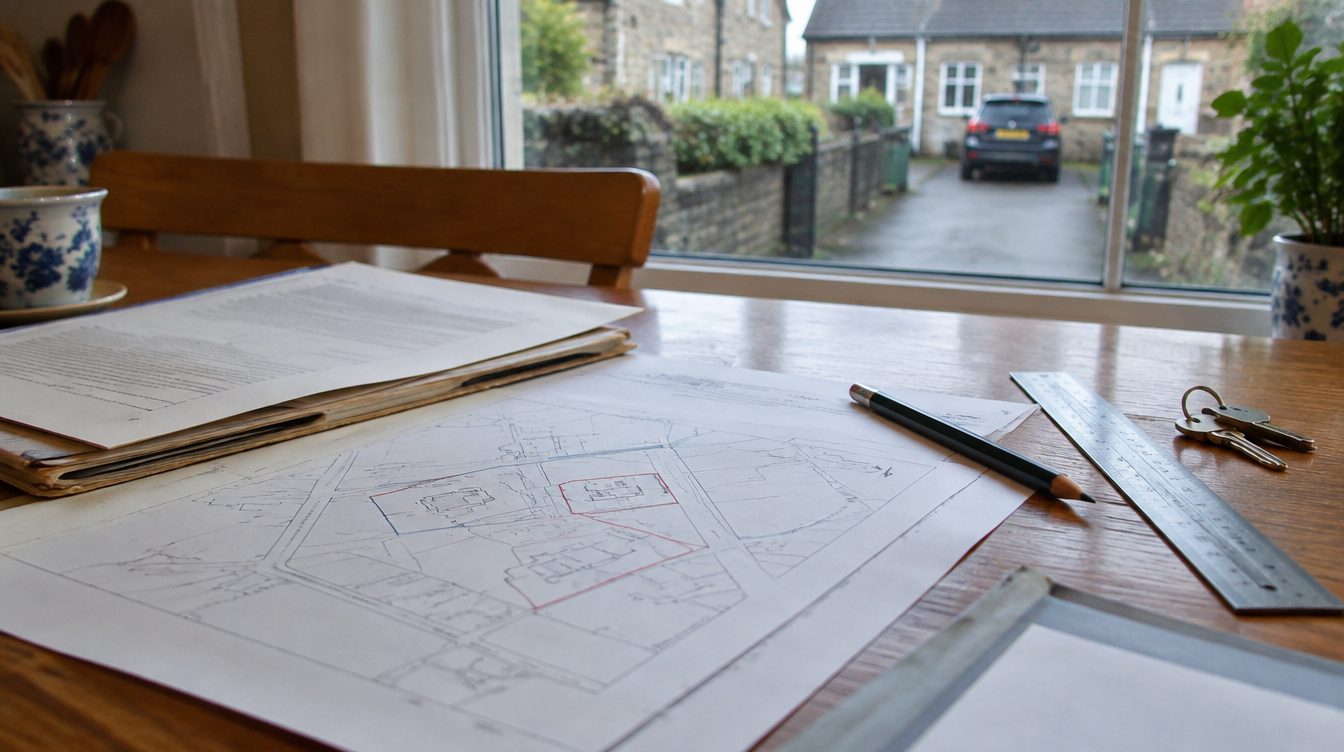
Who owns a shared driveway in Scotland?
There is no single answer, because shared driveways are set up in different ways. The only reliable way to know which arrangement applies to your home is to read the title sheet and title plan for your property and your neighbour’s. If your property is on the Land Register of Scotland, copies can be ordered online from Registers of Scotland for a small fee. Older titles may still sit in the Sasine Register, where the description of the ground can be harder to follow and a solicitor’s help is useful.
In practice, most Scottish shared driveways fall into one of three common set ups:
| Set up | Who owns the ground | Who can use it |
|---|---|---|
| Owned by one house | The whole driveway belongs to one property | The neighbour has a servitude right of access over it |
| Owned in common | Both owners own the whole driveway together (common property) | Both owners, as co-owners |
| Split down the middle | Each owner owns the strip next to their house | Each has a servitude over the other’s strip, so both can use the full width |
Knowing which set up you have changes almost everything about a dispute. An owner of the ground has more freedom to use it than a neighbour who only holds a right to pass over it. If your paperwork is missing or incomplete, our guide on selling a home without the original title deeds explains how solicitors rebuild the picture.
What is a servitude right of access?
A servitude is a right that one property (the benefited property) has over neighbouring land (the burdened property). A right of access over a driveway is the most familiar example. It belongs to the property rather than the person, so it passes automatically to each new owner when the house is sold.
How is a servitude created?
- By a deed: since the Title Conditions (Scotland) Act 2003 came into force, a deed creating a positive servitude is only effective once it is registered against both the benefited and the burdened property.
- By implication: in some cases a right of access is implied when land is divided, for example where a route is plainly needed for the reasonable use of a house.
- By prescription: under section 3 of the Prescription and Limitation (Scotland) Act 1973, a positive servitude that has been possessed for a continuous period of 20 years openly, peaceably and without judicial interruption becomes exempt from challenge.
Prescription is often relied on when a driveway has been used for decades but nothing was written down. It is very evidence heavy: your solicitor will want to know how long the route has been used, by whom, and whether the use was by permission, which can undermine a prescriptive claim.
What does a servitude allow you to do?
A servitude of access lets you pass and repass along the route to reach your property, usually on foot and with vehicles if the deed or the history of use supports that. It does not make you a joint owner of the driveway. The owner of the ground keeps the right to use their own land, as long as they do not block or substantially interfere with your access.
In one shared driveway case at Livingston Sheriff Court, the owner of the driveway sometimes parked on part of it. The court decided this was not a breach of the neighbour’s servitude because access was not blocked or substantially impeded. A servitude protects your ability to get in and out, not your use of every square metre of tarmac.
Can a servitude be lost?
Yes. Under section 8 of the 1973 Act, a right relating to land that has not been exercised or enforced for a continuous period of 20 years is extinguished. A servitude can also end if the benefited owner formally discharges it, if the same person comes to own both properties, or if the Lands Tribunal for Scotland discharges it on an application by the burdened owner.
Who pays to maintain a shared driveway?
When the title deeds deal with maintenance
Many titles contain a real burden setting out how maintenance costs are shared, for example equally between the two houses, or in fixed shares between every property that uses a private access. Real burdens are governed by the Title Conditions (Scotland) Act 2003 and bind each new owner, so the obligation passes with the property. Where several houses share an access road under common burdens, the Act also allows decisions about maintenance to be made by a majority of owners in many cases. If your access is a longer private road rather than a short drive, our guide to selling a house on an unadopted road covers how shared road costs are usually handled.
When the titles say nothing
If there is no real burden, the general position under Scots common law is that the owner of the burdened land does not have to keep a servitude route in repair for the benefit of the neighbour. The person using the access is entitled to carry out reasonable maintenance so that the right can be exercised, normally at their own expense. A Scottish case from 1900, Allan v McLachlan, is often cited for this: a cost sharing promise that was never made a real burden did not bind a later owner, so the repair obligation fell on the person using the access.
Where the driveway is owned in common, the rules on common property apply instead. Broadly, co-owners share the cost of necessary repairs, and major alterations need the agreement of everyone who owns a share.
Does the Tenements (Scotland) Act 2004 apply to a shared driveway?
Generally, no. The Tenements Act provides a fallback scheme for repairs in buildings divided into flats, such as tenements and modern blocks. A driveway shared between two houses is not part of a tenement, so it is governed by the titles, the Title Conditions Act and common law instead. If you live in a flat and your worry is a shared repair bill, our guide to selling a flat with a Notice of Potential Liability for Costs explains how common repair costs follow a sale.
Good to know: if you and your neighbour reach an informal agreement about repairs or parking, put it in writing. A simple signed letter will not bind future owners, but it gives you both a clear record. If you want a lasting arrangement, your solicitors can prepare a deed of servitude or real burden and register it against both titles.
What are the most common shared driveway disputes?
Most disputes start with everyday behaviour rather than complex law. The issues that come up most often include:
- Parking: cars or vans left on the shared section, especially where they block or narrow the route.
- Obstruction: bins, skips, building materials or boats stored on the access.
- Gates, walls and fences: a neighbour installing a gate or narrowing the route without agreement.
- Repairs: disagreement over who pays for resurfacing, drainage or gravel.
- Heavier use: one owner starting a business, building an extra house or bringing in large vehicles that increase wear.
- Boundaries: uncertainty about where one property ends and the other begins, which can turn a use dispute into a boundary dispute.
How do you resolve a shared driveway dispute, step by step?
- Get both sets of titles: check the title sheets and plans for both properties for servitudes and maintenance burdens.
- Keep a record: note dates and take photographs of any obstruction, calmly and without confrontation.
- Talk, then write: a calm conversation followed by a short, polite email setting out a proposed solution.
- Try mediation: a neutral mediator helps you reach a practical agreement without going to court.
- Instruct a solicitor: a solicitor’s letter setting out your rights often resolves matters on its own.
- Consider formal action: only if everything else fails, look at the sheriff court or the Lands Tribunal for Scotland.
| Option | Best for | Things to weigh up |
|---|---|---|
| Direct conversation | Minor parking or bin issues | Free and quick, but relies on goodwill |
| Mediation | Ongoing disagreements where you will still live next door | Voluntary, private and usually far cheaper than court |
| Solicitor’s letter | Clear breaches of a written servitude or burden | Modest cost, and often enough to change behaviour |
| Sheriff court | Persistent obstruction, or a dispute over whether a right exists | Can order a neighbour to stop interfering, but costly, slow and stressful |
| Lands Tribunal for Scotland | Varying or discharging a servitude or burden that no longer works | Specialist forum with its own procedure and fees |
Mediation
Mediation is voluntary and confidential. A trained mediator does not decide who is right but helps both neighbours agree practical rules, such as where cars can be parked and how repair costs will be split. An agreement reached this way is far easier to explain to a future buyer than an unresolved argument.
The sheriff court
If a neighbour is blocking your access or denies that your right exists at all, your solicitor may raise an action in the sheriff court. The court can declare what rights exist and can grant interdict, an order preventing someone from interfering with your access. Court action can take many months and legal costs can be significant, so it is rarely the first choice.
The Lands Tribunal for Scotland
Under section 90 of the Title Conditions (Scotland) Act 2003, the Lands Tribunal for Scotland can discharge or vary title conditions, which include servitudes and real burdens. It can also decide questions about the validity and meaning of real burdens. It is the right forum when an arrangement in the titles no longer makes sense, for example where a servitude route is unworkable after changes to the land. It does not award damages for a neighbour’s behaviour.
Do you have to disclose a driveway dispute when you sell?
Yes. Hiding a dispute is never a good idea, and the Scottish selling process is designed to bring it out. The property questionnaire that forms part of the Home Report asks whether you have to contribute to the cost of anything used jointly, whether you have a right to walk over a neighbour’s property and whether any neighbour has a right to walk over yours. Your answers need to be accurate.
The missives then go further. Most residential sales in Scotland use the Scottish Standard Clauses, and the current edition includes a statement from the seller that there are no current disputes with neighbouring owners or occupiers, along with confirmation that the property has the servitudes it needs. If there is a dispute, your solicitor will qualify those clauses and explain the position to the buyer’s solicitor. Our guide on what sellers must disclose in Scotland explains the wider rules.
Good to know: giving a false or misleading answer in the property questionnaire or the missives can expose you to a claim from the buyer after the sale. Tell your solicitor about any dispute at the start, even if it feels minor or has gone quiet. A sale is rarely lost because a seller was open, but it can be lost when a problem surfaces late.
How does a shared driveway dispute affect buyers?
The buyer’s solicitor will examine the titles to make sure the property has proper legal access. If access depends on a servitude, they will check it is clearly constituted and covers vehicles if that is how the driveway is used. Mortgage lenders generally require good and marketable title with adequate access, so a gap here can hold up a buyer’s mortgage as well as the conveyancing.
An active dispute affects buyers in a few predictable ways:
- Fewer interested buyers: many people will not buy into a known neighbour conflict, especially families who plan to stay for years.
- Lower offers: buyers often price in the risk, which is one of several factors that can reduce the value of a house in Scotland.
- Extra conditions: the buyer’s solicitor may ask for a new deed of servitude, a signed agreement with the neighbour or title indemnity insurance before concluding missives.
- Late withdrawals: problems uncovered during conveyancing are a common reason a buyer pulls out at the last minute.
If a garage, extension or new driveway entrance was added over the years, the buyer’s solicitor may also ask about work carried out without a building warrant or changes not shown on the title plan.
Can you sell a house with a shared driveway dispute?
Yes, you can. The real question is which route suits your circumstances, how much time you have and how much uncertainty you are willing to live with.
| Route | How it works | Suits you if |
|---|---|---|
| Resolve it first | Agree terms with your neighbour, or register a new deed, before you market the property | You have time and the neighbour is willing to engage |
| Sell on the open market with full disclosure | Your solicitor explains the position, and the buyer decides whether to proceed | The dispute is minor and your titles are clear |
| Sell to a cash buyer | A buyer who is used to title and access issues makes an offer on the property as it is | You want certainty, a quicker sale or to step away from the conflict |
Whichever route you choose, instruct a solicitor early so they can order the titles and confirm exactly what rights exist. If you are unsure whether you need one, read do you need a solicitor to sell your house.
For many owners, the dispute is the reason they want to move in the first place. Selling to Sell My House Fast in Scotland means no viewings with a neighbour watching from next door, no chain and a date of entry that suits you. You can compare selling to a cash buyer and selling through an estate agent, or see how long a typical Scottish sale takes. If you are planning a sale more generally, our guide on whether you need a Home Report and have to clear the house before selling is a useful next read.
Frequently asked questions
Can my neighbour park on our shared driveway?
It depends on who owns the driveway and what the titles say. If your neighbour owns the ground and you only have a servitude of access, they can usually park on it as long as your access is not blocked or substantially impeded. If you own the ground and they have the servitude, they normally have no right to park unless the titles give one.
How long does it take to get a right of access by prescription in Scotland?
A positive servitude can be established by possession for a continuous period of 20 years, openly, peaceably and without judicial interruption. The use must not have been by permission, and you will need good evidence of it.
Who pays for repairs if the deeds say nothing?
Where there is no real burden dealing with maintenance, the person using a servitude route is generally the one entitled to repair it, at their own cost. If the driveway is owned in common, the co-owners usually share the cost of necessary repairs. A solicitor can confirm the position for your titles.
Will a driveway dispute stop my sale?
Not necessarily. It must be disclosed, and it may reduce interest or the price, but many properties with access disputes are sold successfully. Clear titles, a written agreement with the neighbour or a buyer who is used to these issues all make a sale easier.
Ready to move on from a driveway dispute?
Get a free, no obligation cash offer for your home. No viewings, no chain and a date of entry that suits you, even if there is an unresolved access issue next door.
