
A house fire is frightening, and the weeks that follow can be just as hard. Alongside the shock, you may be dealing with insurers, loss adjusters, your mortgage lender, builders and the question of where to live. For many owners, the thought of months of repairs leads to one question: can I simply sell the house as it is?
The short answer is yes. There is no rule in Scotland that says a fire damaged house must be repaired before it is sold. You can repair and sell, sell on the open market as it is, or sell directly to a cash buyer. What matters is that you deal properly with your insurance claim and your lender, are open with buyers about the damage, and understand how the Home Report, building warrants and the missives work when a property has been damaged. This guide walks you through each of those steps.
Key points at a glance
- You can legally sell a fire damaged house in Scotland, whether it has been repaired or not.
- Tell your insurer and your mortgage lender about the fire straight away. Your lender has a financial interest in the property and may have a say in how the claim is settled.
- Structural reinstatement work, such as rebuilding a roof, external walls or floors, will usually need a building warrant from the council.
- The Home Report property questionnaire asks about fire damage and any outstanding insurance claim, so the damage must be disclosed.
- A property that is unsafe and suitable for demolition is exempt from the Home Report requirement.
- Selling as it is to a cash buyer avoids mortgage valuation problems, but you should expect a price that reflects the cost of repairs.
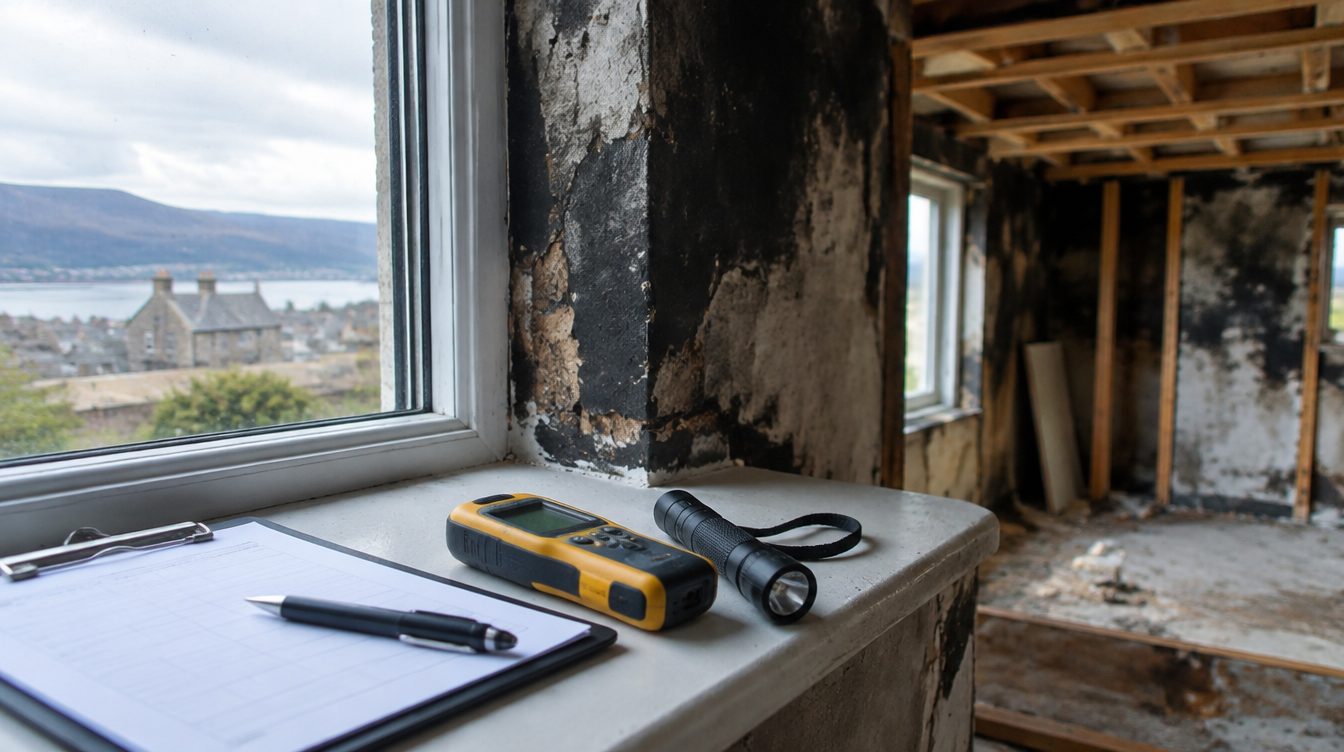
What should you do in the first few weeks after a fire?
Before you think about selling, a few early steps will protect your position and make any sale far smoother later on.
- Make sure the building is safe: follow the advice of the Scottish Fire and Rescue Service and do not go back inside until you are told it is safe.
- Contact your buildings and contents insurers: report the fire as soon as you can and ask what they need from you.
- Tell your mortgage lender: most mortgage terms require you to tell the lender about significant damage. Our guide on when you need to tell your lender about selling explains the wider relationship.
- Secure the property: boarding up windows and doors helps prevent further damage, which insurers usually expect you to take reasonable steps to limit.
- Keep records: take photographs, keep receipts and save every letter and email from the insurer and loss adjuster.
- Speak to a solicitor before agreeing anything: particularly before signing a settlement or agreeing to sell, as both decisions affect each other.
Getting a report from the Scottish Fire and Rescue Service
Insurers, solicitors and buyers often want official confirmation of the incident. The Scottish Fire and Rescue Service (SFRS) can provide an Incident Recording System (IRS) report, which you can request by email through its information governance team. The report is collected mainly for statistical purposes, so it may not hold every detail you want. Personal information is removed before release, and a report may be withheld while a fire is still being investigated, for example where it is not yet known whether it was accidental or deliberate.
If you need more detail than the report provides, SFRS explains that your solicitor can ask to precognosce (formally interview) the officer in charge through its legal services team.
How do insurance claims and settlements affect a sale?
Your buildings insurance claim is usually the biggest single factor in deciding whether to repair or sell. Insurers normally settle a fire claim in one of two ways.
| Settlement type | How it works | What it means for a sale |
|---|---|---|
| Reinstatement | The insurer pays for, or arranges, repairs to put the property back to its pre-fire condition | You sell a repaired house, often closer to full market value, but only after the work is finished |
| Cash settlement | The insurer pays an agreed sum instead of carrying out the repairs | You can sell the house as it is and keep the settlement, subject to your lender’s interest and the policy terms |
Every policy is different, so read the wording and ask the loss adjuster to explain the options in writing. Some insurers will not agree to a cash settlement while a mortgage is outstanding without the lender’s agreement, because the lender is often noted on the policy as having an interest in the property.
Can you sell while a claim is still open?
Yes, but it needs careful handling. In Scotland the risk of damage to a property usually stays with the seller until the date of entry, and the buyer cannot simply take over your insurance policy. Your solicitor will need to agree with the buyer who gets the benefit of any outstanding claim, and that will be reflected in the price. Sometimes the seller keeps the claim and accepts a lower price; sometimes the parties agree to transfer the benefit of the claim, which usually needs the insurer’s consent. A similar issue arises with selling a house with subsidence and an unresolved insurance claim.
Good to know: do not accept a final settlement or sign a sale agreement without first checking how one affects the other. A settlement that assumes you will reinstate the house, followed by a sale before the work is done, can cause problems with your insurer and your lender. Your solicitor and the loss adjuster can help you get the order right.
What if the sale price will not clear the mortgage?
If the fire has reduced the value of the house below what you owe, the insurance payout and sale price together may still cover the mortgage. If they do not, speak to your lender early about the shortfall. Our guide on what happens if the sale price is less than your mortgage sets out the options.
Do you need a structural survey after a fire?
In most cases, yes. Fire damage is rarely limited to what you can see. Heat can weaken timber joists, roof trusses and steel, crack masonry and damage wiring inside walls. Water used to put out the fire can soak into floors, ceilings and insulation, leading to damp and mould weeks later. Smoke and soot can travel well beyond the room where the fire started.
A chartered structural engineer or building surveyor can tell you what is safe, what needs to be replaced and roughly what the work will cost. Their report is valuable whether you repair or sell: insurers rely on it to agree the claim, and serious buyers will want to see it. If the fire has left lasting damp or movement, our guide to selling a house with damp or structural issues covers how buyers usually react. Where the fire brigade used a lot of water, the issues can resemble those in a house that has been flooded.
The gas supply and electrics also need checking by qualified engineers before the property is used again. If the boiler or pipework has been affected, our guide on selling a house that fails its gas safety checks explains what buyers will expect.
Do repairs after a fire need a building warrant?
Often, yes. In Scotland, building work is controlled by the Building (Scotland) Act 2003 and the building regulations, administered by your council’s building standards service. Some minor like for like replacements, such as replacing fittings or surface finishes with the same general type to a standard no worse than before, do not need a warrant. However, the Scottish Government’s technical guidance makes clear that the general exemptions do not cover demolition or alteration of the roof, external walls or structural elements, and replacing a window or door including its frame must meet current standards.
That means rebuilding a fire damaged roof, replacing joists or reconstructing walls will usually need a building warrant before work starts, and a completion certificate once it is finished. Buyers’ solicitors routinely ask for these documents, and missing paperwork can delay a later sale, as our guide on selling a house with work carried out without a building warrant explains. If your home is listed or in a conservation area, extra consents may be needed, as covered in our guide to listed buildings and conservation areas.
Good to know: if a fire damaged building is a danger to people or neighbouring property, the council has powers under section 29 of the Building (Scotland) Act 2003 to carry out urgent work, including demolition if necessary, and to recover the cost from the owner. If you are worried about the safety of the structure, contact your council’s building standards team.
Should you repair, demolish or sell as it is?
There is no single right answer. It depends on how badly the house is damaged, how your insurance is settled, your finances and how much time and energy you have.
| Option | Pros | Cons |
|---|---|---|
| Repair, then sell | Likely to achieve a price closer to full market value; wider pool of mortgage buyers | Months of work, building warrants, rising costs and the stress of managing trades |
| Sell as it is on the open market | No repair work; some buyers like a renovation project | Many buyers need a mortgage, and lenders may refuse to lend on a badly damaged property |
| Sell to a cash buyer | No mortgage valuation, no chain, no viewings, a date of entry that suits you | The price will reflect the cost and risk of the repairs |
| Demolish and sell the plot | May suit a house that is beyond economic repair | Demolition needs a building warrant, and planning issues may affect what can be built in its place |
Repairing first makes most sense where the damage is limited, the insurance covers the work, and you can live elsewhere comfortably while it is done. If the cost of repairs is close to the value of the finished house, or you simply cannot face a long rebuild, selling as it is may be the better choice. Our guide on whether you need to fix repairs before selling covers the general trade off.
How does a fire affect the Home Report?
Most homes sold in Scotland need a Home Report, made up of a single survey, an energy report and a property questionnaire. The property questionnaire asks whether the property has been damaged by fire, storm or flood and whether that damage is the subject of an outstanding insurance claim. Your answers must be accurate.
The surveyor will record visible fire damage in the single survey, and serious damage is likely to be given Category 3, the rating for urgent repairs or replacement. The valuation will reflect the condition of the house. Our guide to what happens when a Home Report highlights major problems explains how buyers respond.
There is one important exemption. A Home Report is not required for a property that is unsafe and suitable for demolition. If the fire has left the house in that condition, your solicitor can confirm whether the exemption applies. For more detail on the rules, see our guide on whether you need a Home Report and have to clear your house before selling.
Do you have to tell buyers about the fire?
Yes. In the missives you will normally confirm that the information in the property questionnaire is true and correct to the best of your knowledge. Concealing fire damage, or giving misleading answers, could leave you facing a claim from the buyer after the sale, and being open from the start avoids a sale collapsing late on when a survey reveals the problem. Our guide on what you must disclose when selling in Scotland covers the wider rules.
The missives also deal with what happens if there is a fire after the sale is agreed. Under the Scottish Standard Clauses used in most residential sales, the risk of damage stays with the seller until the date of entry, and if the property is destroyed or materially damaged before then, either side can usually withdraw. That is why you must keep the house insured until the sale completes.
How much does fire damage reduce the value of a house?
There is no fixed percentage. The effect on value depends on where the damage is, whether the structure is affected, what the insurance has paid for and how much it will cost to put right. A small kitchen fire that has been professionally repaired, with a building warrant and completion certificate where needed, may have little lasting effect. A house with a damaged roof and unsafe floors will be valued on the basis of the work required.
Buyers and valuers typically start with what the house would be worth once repaired, then deduct the repair costs, a margin for risk and the cost of holding the property while the work is done. Smoke odour, hidden water damage and uncertainty over costs all push offers down. If you are comparing routes, it helps to have a contractor’s quote or your loss adjuster’s schedule of works to hand.
Can you sell a fire damaged house through an estate agent?
You can, but expect a smaller pool of buyers. Many buyers need a mortgage, and a lender’s valuer may decline to lend, or retain part of the loan until repairs are complete, on a property with serious fire damage. Sales can fall through late if a buyer’s lender or surveyor takes a cautious view. Buyers who can proceed are often investors or builders looking for a discount. If you go down this route, our guide on reducing estate agent fees may help with costs.
How does selling to a cash buyer work?
A cash buyer does not rely on a mortgage, so there is no lender’s valuation to worry about and no chain behind the purchase. That makes them a practical option for houses that mainstream buyers find difficult, including fire damaged homes. You still need a solicitor, and you still need to be open about the damage, the insurance position and any reports you have.
At Sell My House Fast in Scotland, we help homeowners sell quickly and with less hassle. We can make a cash offer on a fire damaged house as it is, with no viewings, no chain and a date of entry that suits you. Before you decide, read about the costs to check when selling to a cash buyer, and if council tax has built up while the house has been empty, our guide on selling with council tax arrears may help.
Frequently asked questions
Can I sell a fire damaged house without repairing it?
Yes. There is no legal requirement in Scotland to repair a fire damaged house before selling it. You must disclose the damage and deal properly with your insurer and lender, but you can sell the property as it is.
Do I need a Home Report for a fire damaged house?
Usually, yes. A Home Report is needed for most residential sales, and the property questionnaire asks about fire damage and any outstanding insurance claim. The main exception is a property that is unsafe and suitable for demolition, which is exempt from the Home Report requirement.
Can I keep the insurance money if I sell the house?
It depends on your policy, the type of settlement and your lender. Some insurers agree a cash settlement, while others will only pay for reinstatement. Your lender may also have an interest in the payout. Check with your insurer, lender and solicitor before you agree a sale.
Do I need a building warrant to repair fire damage?
Structural reinstatement, such as rebuilding a roof, walls or floors, will usually need a building warrant from your council. Some minor like for like replacements are exempt. If you are unsure, ask your council’s building standards service before work begins.
How do I get a fire report for my insurer?
You can request an Incident Recording System report from the Scottish Fire and Rescue Service by email through its information governance team. Some details may be removed or withheld, particularly while a fire is still under investigation.
Want to move on after a fire?
Get a free, no obligation cash offer for your fire damaged home. No repairs, no viewings and no chain, with a date of entry that suits you.
